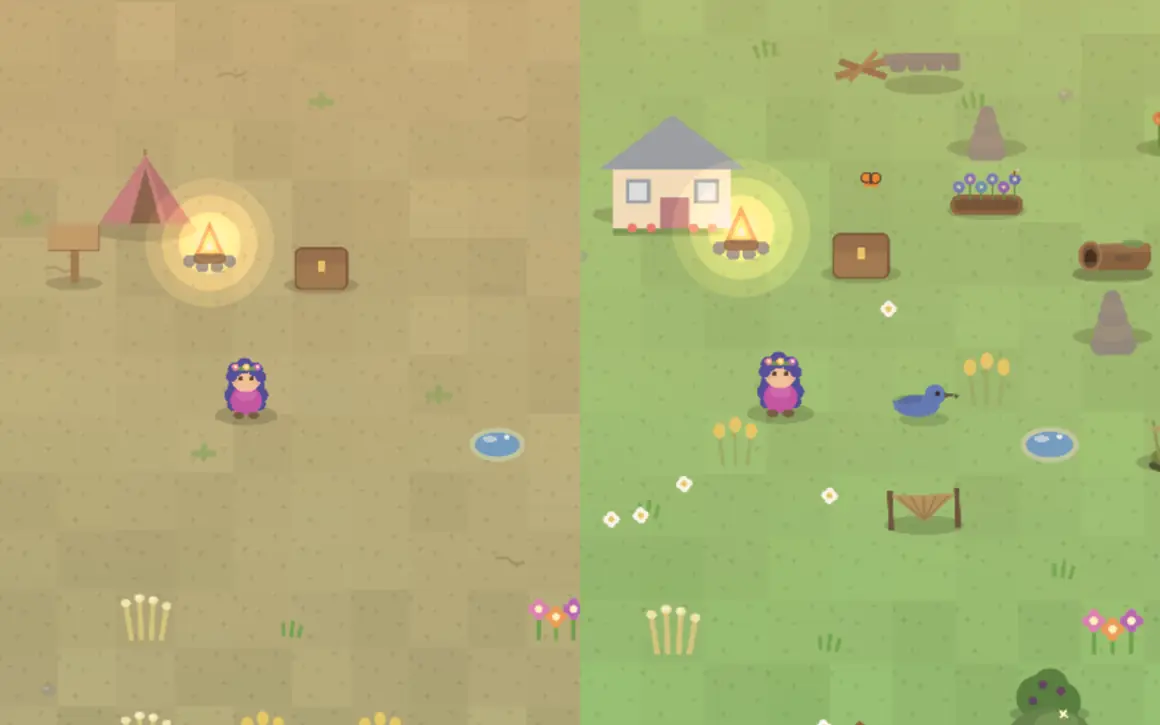
Hi, I'm Bailey. I'm a software developer based in Colorado and the person building Wild Willows.
I've always spent a lot of time outside. Hiking, backpacking, kayaking, camping, and generally wandering around looking at plants and animals has been a pretty consistent part of my life. I'm not an ecologist, and I don't want to pretend to be one. I'm just someone who really likes being outside and tends to get interested in why a place looks the way it does, what lives there, and how all of those things affect each other.
That interest is a big part of where Wild Willows came from.
My background is actually a mix of education and technology.
I studied digital art, technology and creative writing at the University of Denver. More than any one skill, that taught me how to learn a lot of different software and be creative with it. I was also a goalie on the lacrosse team there, and coached middle and high school girls' lacrosse for over a decade afterward.
Before I became a software developer, I worked in instructional design at the Random Acts of Kindness Foundation, where I helped build curriculum and educational resources for schools. I spent a lot of time thinking about how to take a larger idea and turn it into something students could actually engage with.
Years later, I changed careers and learned how to code at Turing School of Software & Design. That ended up changing my life pretty dramatically. I went from having essentially no professional software background to spending the next several years working as a full-stack engineer on web applications, APIs, infrastructure, authentication systems, and other production software.
I also spent those years working in pretty high-stress tech environments. There were deadlines, incidents, constantly changing priorities, pressure to move faster, and the general feeling that there was always another thing that needed your attention. I learned a huge amount from that part of my career, but it also made me appreciate how rare it can feel to have something that isn't asking you to hurry.
That became important when I started thinking about what kind of game I actually wanted to make.
I didn't want Wild Willows to be another thing demanding that you optimize everything or keep up with a clock. I wanted to make something slower. There are no timers pushing you forward and no real penalty for taking your time. You can wander around, work on something for a while, get distracted by an animal, go decorate your house, or just stop and listen to the music.
For a long time, education and software felt like two pretty separate parts of my career. Wild Willows has been the first project where they've really started overlapping again.
I originally started building it because I wanted to make a cozy game about restoring damaged land and getting wildlife to come back. I liked the idea of progression being tied to making a place healthier instead of defeating something or maximizing production. The basic loop is still pretty simple: reshape the land, plant things, create habitat, and see what starts returning.
As I kept working on it, I realized there were a lot of other things I wanted to explore through the project too.
I started making classroom resources around the ecology systems in the game. Then I built a public API around the game data and started creating coding lessons with it. Students can use the same data the game uses to learn things like JavaScript, JSON, arrays, loops, filtering, and APIs.
That part has been especially meaningful to me because I remember what it felt like to be completely new to programming. Coding gave me a career I never expected to have, and I like the idea that this weird little game I made might be somebody else's first introduction to it.
Two free classroom kits: Ecosystems & Habitat for grades 5–8, with an educator guide and six student worksheets, and Intro to APIs & Web Development for grades 9–12. Both are here, along with free copies for schools.
The classroom pages teach JavaScript against real data — a lesson, and an editor with thirty project ideas. The data itself comes from the public API, which is free, needs no key, and is the same one the game reads.
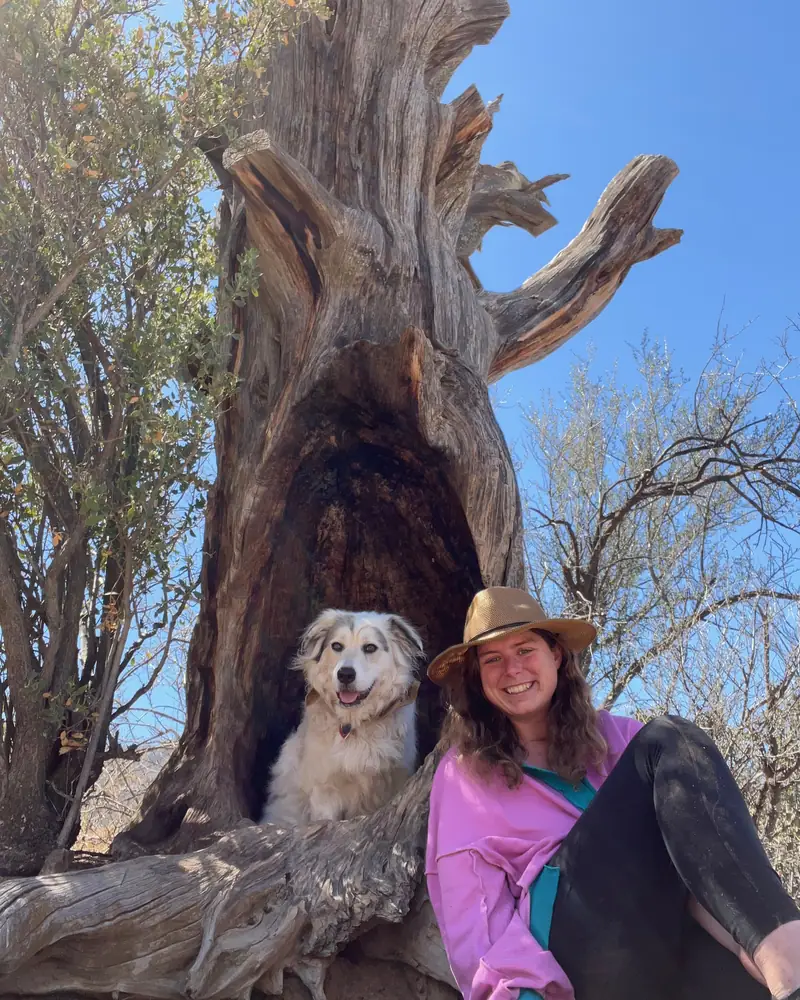
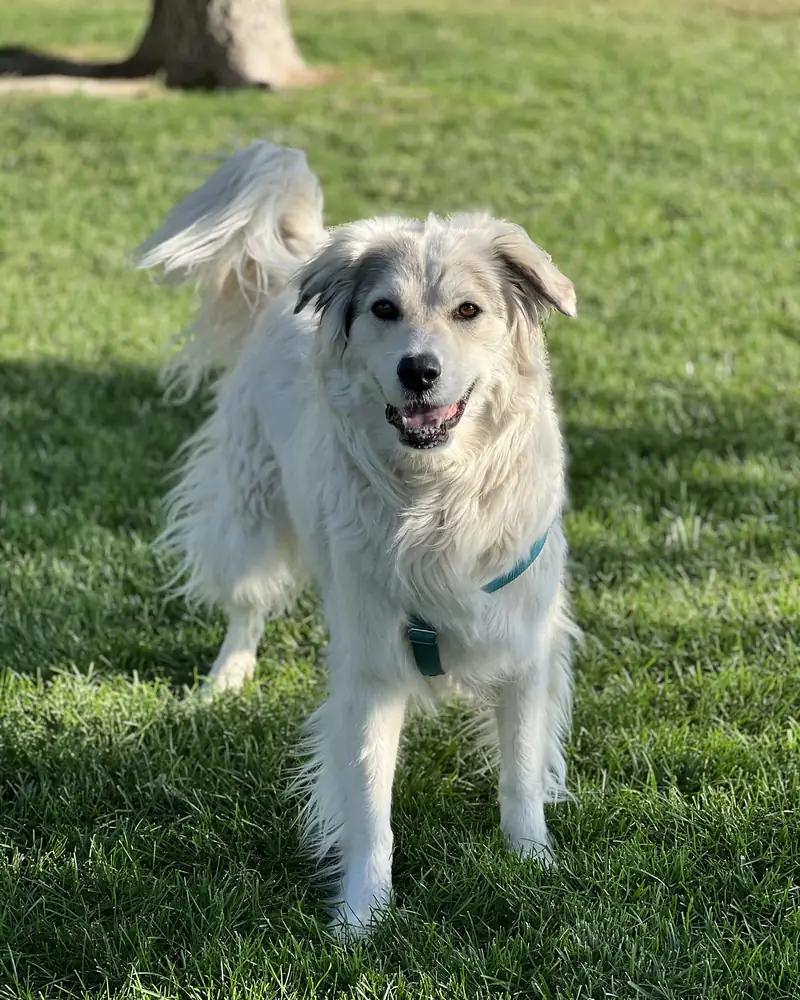
Willow is my Great Pyrenees and Border Collie mix, and yes, Wild Willows is partly named after her. She's also a certified therapy dog, and for the past four years we've volunteered together at Tennyson Center for Children.
She has been with me through a lot of different chapters of my life and has spent an unreasonable number of hours sleeping next to me and barking at squirrels while I work on this game.
At this point, I'm still figuring out exactly what Wild Willows will become.
I want to keep making the game better and deeper. I want the ecology systems to become more interesting without turning the game into a textbook. I want teachers to be able to use pieces of it in ways that are actually useful to them. I want the coding resources to keep growing. And I want to keep the project open enough that people can do things with it that I haven't thought of.
Mostly, I want to build something I care about.
Wild Willows has given me a place to bring together a lot of things that used to feel unrelated in my life, and I'm interested in seeing where that goes.
Bug reports, questions, classroom ideas and pictures of your preserve all reach the same person. I read everything.